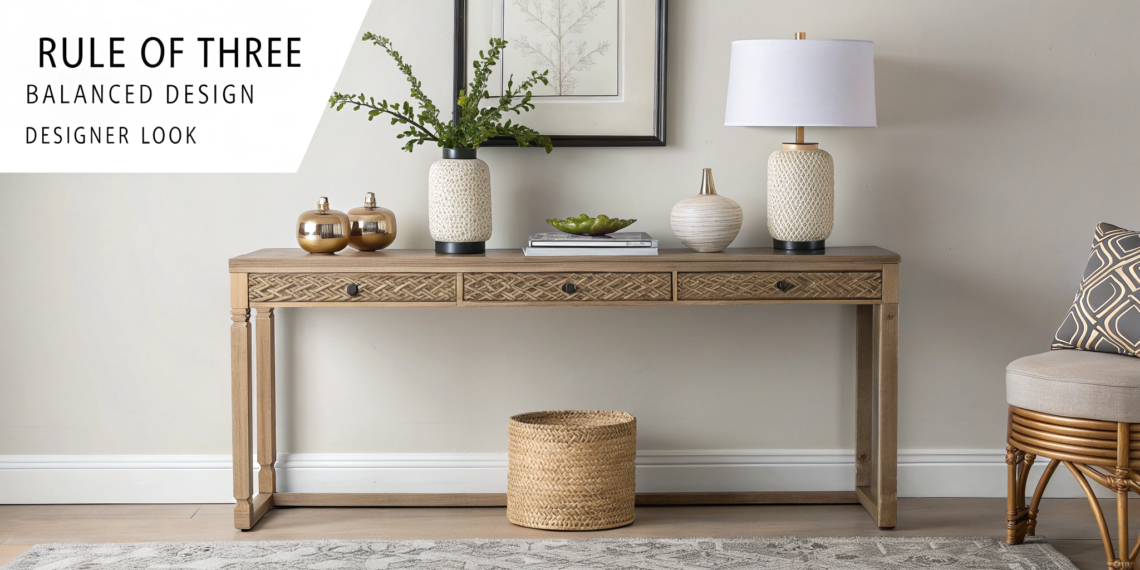

Introduction (E-E-A-T & Engaging Hook)
The Style a Console Table—whether tucked into an entryway, behind a sofa, or anchoring a dining room wall—is one of the most visible pieces of furniture in your home. It’s a focal point, but styling it is where most people get stuck. They either pile on too much clutter or leave it looking sparse and uninviting. The secret to achieving that effortlessly chic, balanced look you see in magazines isn’t complicated; it’s geometry! As an interior stylist, I rely on two fundamental principles: the Rule of Three (using items in odd numbers) and the Principle of Layering. This guide breaks down exactly how to style a console table using these professional secrets, turning your blank surface into a beautiful, proportional design statement that welcomes guests and elevates your entire space.
Step 1: Anchoring the Vertical Focal Point
Before placing small accessories, you must establish the main anchor element that defines the vertical height of the arrangement.
The Power of the High Anchor
- The Goal: To establish visual weight and vertical height, usually spanning one-half to two-thirds of the wall space above the table.
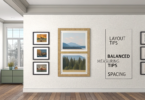
- Anchor Options: A large, statement Mirror (which also reflects light and expands the space), a large piece of Art (canvas or framed print), or a striking Gallery Wall centered over the table.
- E-E-A-T Tip: Ensure the bottom edge of the mirror or art is hung about 6–8 inches above the tabletop. This keeps it visually connected to the table without crowding the accessories.
Dealing with Two Anchors
- The Scenario: If you choose two matching lamps as your anchors, they must sit at equal height on either side of the table.
- The Rule of Three Connection: Even if you use two lamps, the space between them (the horizontal center) is where you introduce the third high, central element—a stack of books, a sculpture, or a tall vase—to break the symmetry and keep the eye moving.
Step 2: The Designer Secret: The Rule of Three
The Rule of Three dictates that items arranged in odd numbers are more pleasing and visually engaging than even numbers.
Creating the Visual Triangle
- Grouping: On each end of the console table, create a group of three objects. This is the fundamental building block of a successful arrangement.
- Varied Heights: The objects within each group of three must vary dramatically in height to create a visual triangle. The highest point draws the eye, and the lower elements act as anchors.
- Example Group: Tall Item (Vase or Lamp) + Medium Item (Stack of Books) + Small Item (A decorative box or candle).
- Proportional Symmetry: If the center of the table is symmetrical (two tall lamps), the groups on the ends should be arranged to mirror each other. If the center is asymmetrical, the two end groups should have different heights and mass to maintain balance.
Step 3: Layering and Introducing Texture
Once the tall, structural items are placed, layering adds depth and interest.
Layering the Foreground and Background
- Background Layer: Place the largest accessories (the lamps, tall vases) at the back of the table, closest to the wall.
- Foreground Layer: Place the smallest items (trays, coasters, bowls) in the front. This depth adds complexity and keeps the table from looking flat.
- Horizontal Items: Use books or trays to create horizontal stacks. These flat items act as visual pedestals for small collectibles, lifting them to different heights.
- Internal Link: [Anchor text: “choosing the right coffee table books” to a Home Decor post about book curation and display].
Incorporating the Five Textures
A professional console styling always includes a mix of textures:
- Organic: Flowers, plants, wood, or woven baskets.
- Metallic: Brass, gold, chrome (in lamps or frames).
- Ceramic/Glass: Vases, bowls, or candle holders.
- Soft: Stack of linen napkins, a small runner, or soft-cover books.
- Reflective: Mirrors, glass cloches, or polished metal objects.
Step 4: Activating the Space Below the Table
Do not forget the space underneath! Utilizing this area adds function and completeness to the entire vignette.
Adding Weight and Function
- Large Basket: Place one or two large woven baskets (for blankets or shoe storage in the entryway) underneath the table. This adds organic texture and grounds the entire piece of furniture.
- Stools or Poufs: Place two matching low stools or poufs partially tucked underneath. This adds an architectural element, softens the harsh lines of the table, and provides extra seating in a pinch.
- E-E-A-T Authority: Avoid storing small items or clutter underneath. The items below the table should be large, simple, and functional.
A Sample Console Styling Blueprint
| Element | Position | Height/Visual Role | Function/Texture |
| Mirror | Center (Wall Anchor) | Highest Point (Wall) | Reflective, Opens space |
| Lamp (1) | Left Third (Table) | Tall (Establishes Triangle) | Metallic, Lighting |
| Plant/Vase | Center Front (Table) | Medium Height | Organic, Adds color |
| Books (Stack) | Right Third (Table) | Horizontal Pedestal | Soft, Layering base |
| Decorative Tray | Front Right (Table) | Low/Small | Metallic/Glass, Catch-all for keys |
| Large Woven Basket | Underneath | Grounding Weight | Organic, Storage |
| Internal Link: [Anchor text: “using storage creatively” to a Home Organization post on maximizing small spaces]. |
4. FAQ Section (Ready for Schema Markup)
Q: Should the lamp height be taller than the mirror/art?
A: No. The lamp should usually be shorter than the main wall anchor (mirror or art) to avoid blocking it. The lamp creates the highest point on the table, but the mirror/art creates the highest point on the wall. This separation prevents them from competing.
Q: How do I style a console table that is very long?
A: On a long table (over 6 feet), you can treat it as two separate tables or use a Rule of Five. Establish two balanced groupings on the ends, and create a third, larger, central grouping that acts as a single, commanding focal point (e.g., a massive floral arrangement or a bold sculptural piece).
Q: Where should the table be placed in the room?
A: In an entryway, it should sit against the main wall you face when you enter. In a living room, it should be placed behind the sofa (acting as a sofa table) or against a long wall that needs grounding.
Q: Is it okay to use only even numbers of items (e.g., two lamps and two bowls)?
A: It creates symmetry, but it often lacks energy. The Rule of Three (or five, or seven) introduces asymmetry and varying heights, which makes the arrangement feel more dynamic and less static. If you use two lamps, use three items in the middle to compensate.
Q: How do I introduce seasonal items without making it look cluttered?
A: Use the catch-all trays and decorative bowls as your seasonal spots. Swap out a few low-lying items (e.g., replace a regular candle with a seasonal one, or trade a box for a stack of gourds) and remove an old item for every new one you introduce.
Q: What is the ideal depth for a console table?
A: Console tables are usually narrow, ranging from 12 to 18 inches deep. For an entryway, aim for a depth that doesn’t obstruct traffic flow (12 to 15 inches is ideal).