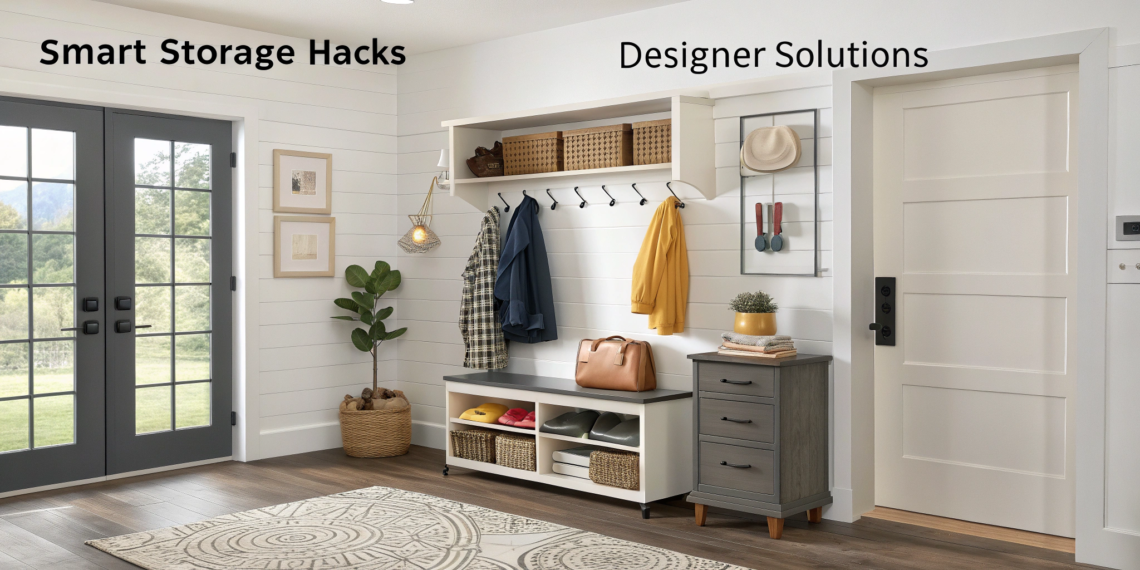

2. Introduction (E-E-A-T & Engaging Hook)
The entryway, or mudroom, is the workhorse of your home. It’s where daily chaos begins and ends—the landing strip for keys, bags, coats, shoes, and mail. When this tiny space is cluttered, it doesn’t just look bad; it sets a stressful, disorganized tone for your entire home. For those living in small apartments or homes without a dedicated foyer, maximizing every inch is critical. The good news is that even a small wall can be transformed into a highly functional “drop zone” using smart, vertical storage solutions. As an organization expert, I specialize in turning underutilized square footage into high-impact functional areas. This guide reveals 7 smart storage hacks and designer solutions to maximize your tiny entryway, helping you conquer clutter and create a stylish, welcoming transition zone for everyone entering your home.
3. Core Content Sections (Expanded for 1,200–1,500 Words)
Hack 1: Capitalize on Vertical Space maximize tiny entryway
When floor space is zero, you must use the walls from floor to ceiling.
The Vertical Wall System
- The Strategy: Install one single vertical shelving unit or use a peg rail system that extends high up the wall. This gives the illusion of height and provides multiple layers of storage.
- Hooks vs. Racks: Use individual, sturdy hooks instead of a single, wide coat rack. Hooks allow you to hang items higher and customize the spacing.
- E-E-A-T Insight: Ensure the distance between the lowest hook (for bags) and the highest hook (for coats) is at least 10–12 inches vertically, preventing items from cluttering the floor space.
Hack 2: Slim-Profile and Floating Furniture
Every piece of furniture must be minimal and multipurpose.
The Shoe Solution
- Avoid: Large, bulky shoe racks that sit on the floor.
- The Fix: Install slim, tilt-out shoe cabinets (usually 6–8 inches deep). These mount directly to the wall and store shoes vertically behind a tilting front panel, hiding the mess while maintaining the narrowest possible profile.
- Floating Console: Instead of a console table with legs, use a floating shelf as a landing strip for keys and mail. This keeps the floor clear, which is crucial for creating the illusion of space. (Internal Link: Link to the ‘Console Table Styling’ post for minimalist decor ideas.)
Hack 3: The Mirror/Shelf Combo
Multipurpose items save space and reduce visual clutter.
Dual-Function Accessories
- The Goal: Every accessory must serve two functions.
- The Combo: Use a mirror that has a small, built-in shelf underneath or a shallow recess (like a medicine cabinet). The mirror opens up the small space visually, and the shelf serves as the drop zone for keys and sunglasses.
- The Basket Hack: Mount a small, shallow basket or a wire file organizer near the door. Label it “OUT” for items that need to leave the house the next day (library books, dry cleaning).
Hack 4: Light and Illusion
In a small space, designers use light and color to trick the eye.
- High Gloss Paint: Use a semi-gloss or high-gloss paint on the walls or vertical storage unit in the entryway. The shine reflects light, making the small space feel larger and brighter.
- The Runners: Use a narrow runner rug that runs the length of the entryway, if possible. This draws the eye forward, making the hall feel longer than it is.
- Internal Link: [Anchor text: “lighting for small spaces” to the Home Decor post on using ceiling paint for drama and space expansion].
Hack 5: Customized Caddies for Daily Clutter
Use defined containers for specific, high-frequency clutter items.
The Small Storage Strategy
- Keys: Use a magnetic key holder or a dedicated decorative bowl (kept on the floating shelf) that is only for keys.
- Dog Leashes/Small Items: Use small, labeled hooks or clear command hooks for dog leashes, umbrella, or reusable grocery bags, ensuring they are contained near the door.
- Hats/Gloves: Install a small, attractive wicker basket on a high shelf. These items are seasonal, bulky, and should be out of the immediate line of sight but easy to grab.
Hack 6: The Bench with Hidden Storage
If the space allows for a low piece of furniture, make it multifunctional.
- The Method: Use a storage bench that opens up for shoe or bag storage, or one that has cubbies beneath it for baskets.
- The Function: The bench provides a dedicated spot to sit and put on shoes (preventing traffic jams) and handles heavy storage simultaneously.
- E-E-A-T Authority: Never put shoes directly on the floor underneath an open bench. Always use labeled bins or containers to contain the shoes, which prevents the inevitable clutter pileup.
Hack 7: The Maintenance Spot
A clean entryway needs a dedicated spot for cleaning tools.
- The Tool: Mount a set of high, slim hooks or a small utility caddy on the back of the entryway closet door (if one exists).
- The Purpose: Use this spot to hold a small, handheld vacuum, a dustpan/brush set, and a carpet spot-cleaner. Dealing with mud and dirt immediately prevents it from tracking into the rest of the house.
- Internal Link: [Anchor text: “simple organizing maintenance” to the Smart Living post on organizing high-traffic zones for continued order].
4. FAQ Section (Ready for Schema Markup)
Q: Where should I put the mail in a tiny entryway?
A: Use the “Mail Station” technique from the paperless guide. Mount a simple, sleek vertical magazine holder on the wall above the floating shelf. This is the only acceptable place for temporary mail. Process and shred the contents daily.
Q: Is it better to have open storage or closed cabinets in a small space?
A: Closed storage is always better for tiny entryways. Open shelves display clutter instantly. The goal is to hide shoes, bags, and miscellaneous items behind a smooth, clean cabinet face (like the tilt-out shoe cabinet).
Q: How do I handle winter coats when space is limited?
A: Implement seasonal rotation. Only keep the current season’s necessary coats on the immediate entryway hooks. Store off-season coats in garment bags in a bedroom closet or under-the-bed storage.
Q: What is the ideal width for an entryway runner rug?
A: The runner should leave at least 6 to 8 inches of floor space exposed on both sides. This creates a border that makes the hall feel wider. Do not choose a runner that spans the entire width of the hall.
Q: Can I use dark colors in a small entryway?
A: Yes, but only if you use a high-gloss finish. The dark color can look sophisticated and dramatic, but the high sheen is required to bounce light back into the space, preventing it from feeling like a cave.
Q: What is the best type of hook for coats?
A: Use double-pronged hooks that curve outward. The double hook allows you to hang two things (coat and scarf) on one spot, and the curve prevents the coat from easily slipping off and landing on the floor.