
2. Introduction (E-E-A-T & Engaging Hook)
Home automation for beginners can feel overwhelming, especially with the endless devices, protocols, and setups available today. Many people want the convenience and energy savings of a smart home but worry that it’s too complicated or expensive to get started. The truth is, you only need a few simple devices to begin building a smart, efficient, and modern home.
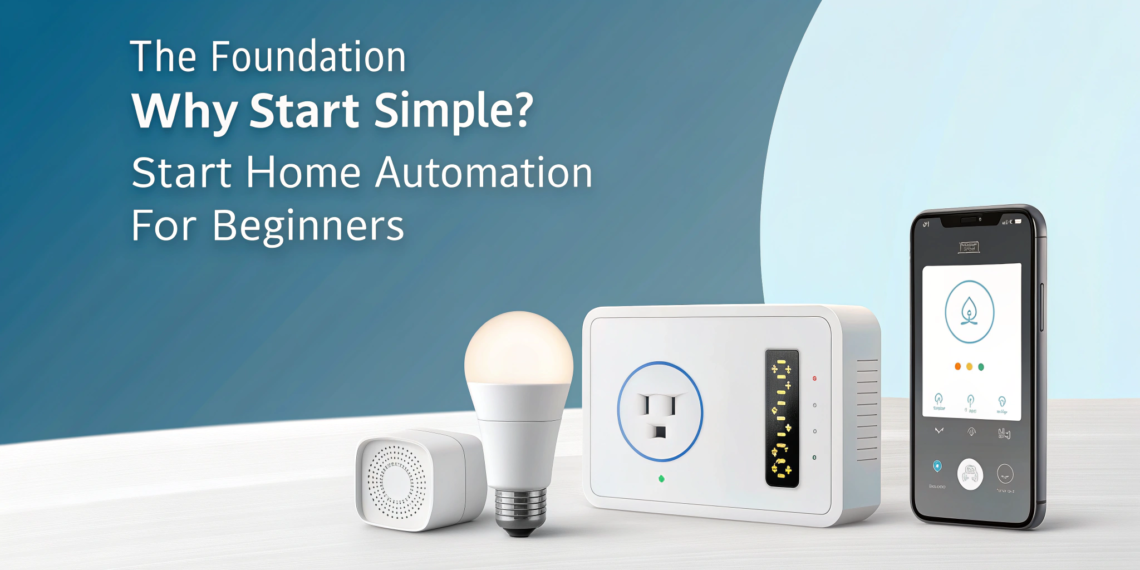
The Foundation: Why Start Simple? Start Home Automation for Beginners
A successful smart home starts with solving common problems, not installing complex gadgets.
The Criteria for Beginner Devices
We select devices based on three key criteria:
Low Barrier to Entry: Easy plug-and-play setup that uses Wi-Fi and requires no complicated hubs (initially).
High Daily Impact: Devices that solve immediate frustrations (like fumbling for a light switch or checking if the door is locked).
Scalability: Devices that can easily be integrated into a larger system later on.
The Hub Debate
E-E-A-T Authority: For beginners, the Voice Assistant Speaker (Google Home or Amazon Echo) often serves as a perfectly adequate, non-proprietary starter hub and voice control center. You do not need a separate dedicated smart hub until you move to more complex Z-Wave or Zigbee protocols.
The 5 Essential Smart Devices to Start With
These devices represent the best starting point for maximum convenience and minimal hassle.
1. Smart Plugs (The Gateway Device)
What it is: A simple adapter that plugs into an existing outlet, allowing you to control whatever is plugged into it (lamps, coffee makers, fans) via a smartphone app or voice command.
Why it’s Essential: It instantly converts non-smart devices into smart devices. It’s the cheapest way to experience the convenience of home automation.
Best Use Case: Set up a scheduled routine: “Turn the floor lamp on at sunset” or “Turn the slow cooker off at 5 PM.”
2. Smart Bulbs (The Atmosphere Creator)
What it is: LED bulbs that connect directly to your Wi-Fi, allowing you to change color, brightness, and schedule them.
Why it’s Essential: Lighting is the fastest way to change the atmosphere of a room. Start with the main lamps in your living room or bedroom.
The Routine Power: Use “Scenes”—pre-set lighting combinations. Example: A “Movie Night” scene could dim the overhead light and turn a floor lamp blue.
3. Smart Thermostat (The Energy Saver)
What it is: A thermostat (like Nest or Ecobee) that learns your schedule, senses when you’re home, and can be controlled remotely.
Why it’s Essential: This device offers the fastest Return on Investment (ROI) by saving you 10–15% on heating and cooling costs. It’s a high-impact device that simplifies energy management.
Pro Tip: Look for models compatible with your existing HVAC system and that offer remote sensors to ensure temperature consistency in different rooms.
4. Smart Doorbell Camera (The Security Starter)
What it is: A doorbell with a built-in camera, speaker, and microphone that sends alerts to your phone when someone approaches.
Why it’s Essential: It’s the highest-value security tool. It allows two-way communication (you can talk to delivery drivers when you’re away) and provides immediate awareness of your home’s exterior.
E-E-A-T Authority: Choose a model with “Activity Zones” functionality, allowing you to ignore motion from the sidewalk and only get alerts for activity directly on your porch.
5. Leak/Water Sensors (The Disaster Preventer)
What it is: A small, battery-powered sensor placed near areas prone to leaks (water heater, sump pump, under the kitchen sink) that sends an alert if water is detected.
Why it’s Essential: This is the ultimate preventative device. Water damage is one of the most costly and stressful home repairs. These sensors are inexpensive and provide priceless peace of mind.
Internal Link: [Anchor text: “damage prevention tips” to the Cleaning & Maintenance post on handling hard water or limescale, as prevention is key].
Integrating Your Devices: Creating Simple Routines
The real value of smart devices is when they work together in automated routines.
The “Good Morning” Routine
Trigger: Voice command (“Hey Google, Good Morning”) or a specific alarm time.
Action Sequence: Smart Thermostat raises the temperature + Smart Plugs turn on the coffee maker + Smart Bulbs turn on to a warm, low setting.
The “I’m Home” Routine
Trigger: Geofencing (when your phone enters the home perimeter) or a voice command.
Action Sequence: Smart Doorbell records the arrival + Smart Plugs turn on main lamps + Smart Thermostat adjusts the temperature.
Internal Link: [Anchor text: “organizing your digital life” to the Smart Living post on streamlining your digital routine].
Setup and Security Tips for Beginners
Keep your new smart home secure and running smoothly.
Dedicated 2.4 GHz Network: Most starter smart devices (plugs, bulbs) require the slower 2.4 GHz Wi-Fi band, not the faster 5 GHz. Ensure your router is broadcasting both bands and connect your devices to the 2.4 GHz network for stability.
Strong Passwords: Change the default passwords on all new devices and use a robust, unique password. Use a password manager if necessary.
Placement Strategy: Place the voice assistant hub (Google or Echo) centrally in the house where it can clearly hear commands from the most common areas (living room, kitchen).
4. FAQ Section (Ready for Schema Markup)
Q: Do I need to buy all devices from the same brand?
A: No. Most devices today are compatible with the major voice assistants (Google Assistant and Amazon Alexa). Focusing on one voice assistant ensures compatibility, but you can mix and match brands (e.g., Nest Thermostat with Phillips Hue bulbs).
Q: How do I know if a smart thermostat is compatible with my system?
A: Check the back of your existing thermostat. If you have “C wire” (common wire), it’s usually compatible. Most smart thermostat sites have an online compatibility checker where you input your existing wiring setup.
Q: Are smart plugs safe to use with heavy appliances?
A: Check the amp rating of the plug. Most standard smart plugs handle up to 15 amps, which is safe for small appliances, fans, and lamps. Never use them with appliances that draw high, continuous power, like large space heaters or air conditioners, unless the plug is explicitly rated for it.
Q: What is the difference between Z-Wave and Wi-Fi devices?
A: Wi-Fi devices connect directly to your home router (easy setup, better for beginners). Z-Wave/Zigbee devices require a separate central hub, but they form their own mesh network, are more reliable, and use less battery power (better for large homes and advanced automation).
Q: Are my smart home devices listening to me all the time?
A: Voice assistants (like Echo and Google) are always in a listening mode for the specific wake word. They only begin recording and transmitting audio after the wake word is detected. You can usually review and delete your recordings in the companion app.
Q: Can I automate my window blinds?
A: Yes, smart shades and blind motors are increasingly popular. This is typically a more advanced step, often requiring a dedicated hub, but it’s excellent for regulating heat and privacy.