
2. Introduction (E-E-A-T & Engaging Hook)
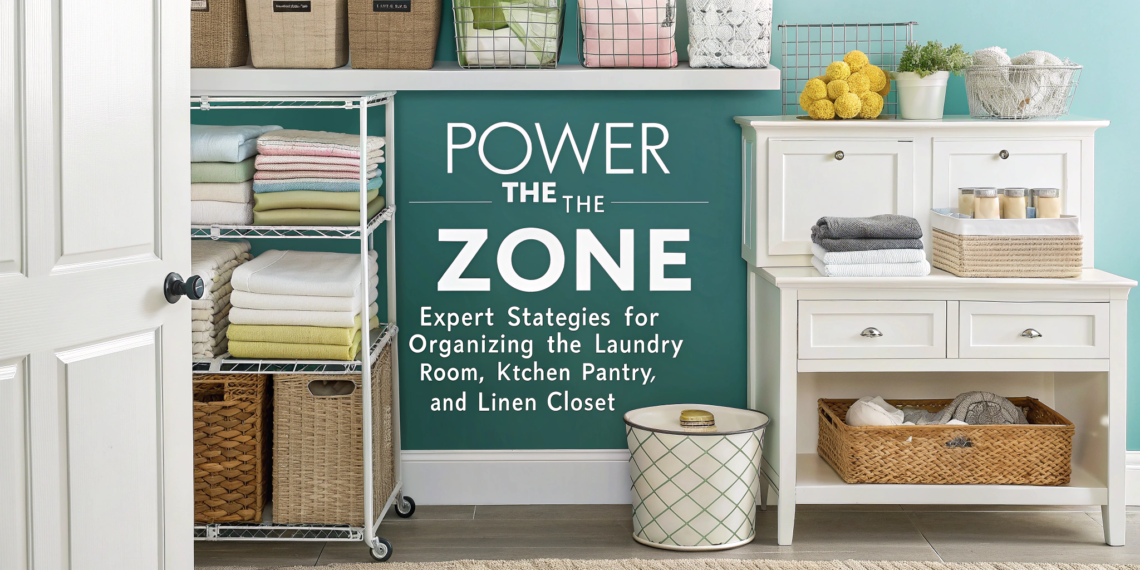
> The secret to a truly organized home lies not in tackling an entire house at once, but in conquering the high-traffic “hot zones”: the laundry room, the kitchen pantry, and the linen closet. These spaces are often small, perpetually cluttered, and, if disorganized, create daily friction in your routine. Most people try to use single solutions (like one big basket), but professionals rely on **functional zoning**—dividing the space into highly specific, purpose-driven areas. As a certified home organization specialist, I know that applying a custom zone strategy to these three key areas will dramatically improve your efficiency and reduce stress. This guide breaks down **expert strategies for organizing the laundry room, kitchen pantry, and linen closet**, ensuring every item has a clear, logical home and transforming chaos into calm
Zone 1: The Laundry Room (Focus on Flow and Function)
The laundry room is a process area. Organization should speed up the workflow.
The Three Functional Zones of Laundry
1. **The Pre-Treatment Zone:** This area should be near the washer and hold immediate necessities: stain remover sticks, pre-soak sprays, and small scrubbing brushes. Use a small, accessible caddy that can be carried to the sink if needed.
2. **The Processing Zone:** This zone includes the main cleaning supplies. Use **clear, labeled dispensers** for detergent, powder, and bleach. This looks tidy and lets you see when you’re running low. Store dryer balls, fabric sheets, and a trash bin (for lint) near the dryer.
3. **The Finishing Zone (Vertical Focus):** This area streamlines the last steps. Mount a **wall-mounted drying rack** that folds flat when not in use. Use a vertical solution for the iron and ironing board—either a slim caddy or an over-the-door hanger.
* **E-E-A-T Tip:** If your laundry room is also a mudroom, use a slim vertical shelving unit for shoes and coats, but ensure it’s visually separate from the cleaning supplies to avoid cross-contamination.
Zone 2: The Kitchen Pantry (Focus on Accessibility and Visibility)
The pantry’s main job is to ensure you can see everything you own, preventing duplicates and expired food.
Zoning by Meal Prep and Frequency
1. **High-Frequency Zone (Eye Level):** This zone should contain items you reach for daily: spices (on a tiered shelf or lazy Susan), baking essentials, snacks, and oils. Place these items on the most accessible shelves.
2. **Low-Frequency Zone (Bottom Shelf):** Heavy, bulky items and backup stock belong here: cases of soda, bulk paper towels, and appliances you use once a month. This placement improves stability.
3. **Meal Prep Zone (Mid-Shelf):** Group ingredients used for common meals: all pasta and sauces together, all taco ingredients together, or all breakfast cereals together. **Use clear, uniform bins** to contain these categories.
* **The “Floating” Decanting Rule:** Decant items you use slowly and store indefinitely (flour, sugar, oats, dried beans) into airtight, clear containers. Leave items with a short shelf life (cereal, chips) in their original boxes to quickly check the expiration date.
Zone 3: The Linen Closet (Focus on Vertical Compression)
The linen closet is often small and deep. The key is maximizing vertical space and keeping things from toppling over.
Zoning by Item Type and Function
1. **The Sheet Set Zone:** The best strategy is the “Fold and Store” method. **Fold each complete set of sheets (fitted, flat, pillowcases) and place them inside one of the pillowcases.** This keeps sets together, compressed, and organized. Stack these sets vertically on shelves.
2. **The Towel Zone:** Towels should be rolled or folded using the KonMari file-folding method and stacked vertically. This allows you to pull one towel out without disrupting the stack. Zone towels by size (bath towels on one shelf, hand towels on another).
3. **The Medicine/First Aid Zone:** If storing medicine here, use clear, labeled plastic tubs on the **top-most shelf** (out of reach of children). Keep this zone separate from sheets and towels to prevent odor transfer.
* **E-E-A-T Authority:** Never stack sheets higher than **3 feet**. If you have excess linen that high, it signals a need to declutter and donate old, worn items. **(Internal Link: Link to the ‘Digital Declutter’ post for general guidance on the decluttering mindset).**
Vertical Space & Consistency Tools
All three zones benefit from uniform tools and vertical organization.
Essential Organization Tools
* **Vertical Dividers:** Use adjustable wire or plastic shelf dividers in the pantry and linen closet to keep vertical stacks (of plates or sheets) from falling over sideways.
* **Clear Bins and Labels:** Uniformity is key. Use the same style of clear plastic bin throughout each zone. **Labels are non-negotiable**—they tell you (and everyone else) where the item lives and where it needs to return.
* **Over-the-Door Storage:** The back of the door is often overlooked. Use a heavy-duty, over-the-door shoe organizer in the laundry room (for socks/small supplies) or the pantry (for foil, wrap, and sandwich bags).
Maintenance Strategy for Lasting Order
Organization only works if it’s maintained.
* **The Monthly 10-Minute Tidy:** Dedicate 10 minutes monthly to quickly scan each zone. In the pantry, check for expired items. In the linen closet, re-fold any toppled stacks. In the laundry room, wipe down dispensers and put away stray items.
* **Internal Link:** [Anchor text: “speed up your cleaning routine” to a **Cleaning & Maintenance** post on establishing daily cleaning habits].
—
### 4. FAQ Section (Ready for Schema Markup)
**Q: Should I store cleaning supplies in the kitchen pantry?**
**A:** No. Cleaning supplies (even natural ones) should always be stored separately from food. If you must use a shared closet, store cleaning supplies on the bottom shelf (for safety) and use a sealed caddy that keeps the items contained and isolated from food products.
**Q: My laundry room is tiny. How can I create a drying rack?**
**A:** If you can’t install a wall-mounted rack, use a **tension rod** stretched between two cabinets or walls over the laundry sink or between the washer/dryer. This provides a temporary, high-up spot for air-drying clothes.
**Q: How do I store oddly shaped items in the pantry, like water bottles?**
**A:** Use **horizontal wine racks** for water bottle storage. The slant keeps them secure, and they stack vertically, saving shelf space while making them easily accessible.
**Q: Is it better to roll or fold towels?**
**A:** **Rolling towels** saves space horizontally and minimizes wrinkles, making it the better choice for narrow, deep shelves. If you have tall shelves, vertical file-folding is better for visibility.
**Q: What is the ideal height for a pantry shelf?**
**A:** Shelves should be adjustable. Aim for a clearance of about **8 to 10 inches** for standard canned goods and jars. Only one or two shelves need to be taller (12–14 inches) for cereal boxes or large containers.
**Q: What do I do with empty containers or dispensers?**
**A:** Immediately refill them from your backup stock, or move the empty container to your shopping list location. Never let an empty container take up valuable prime shelf space.